What your CNC machine really costs per hour
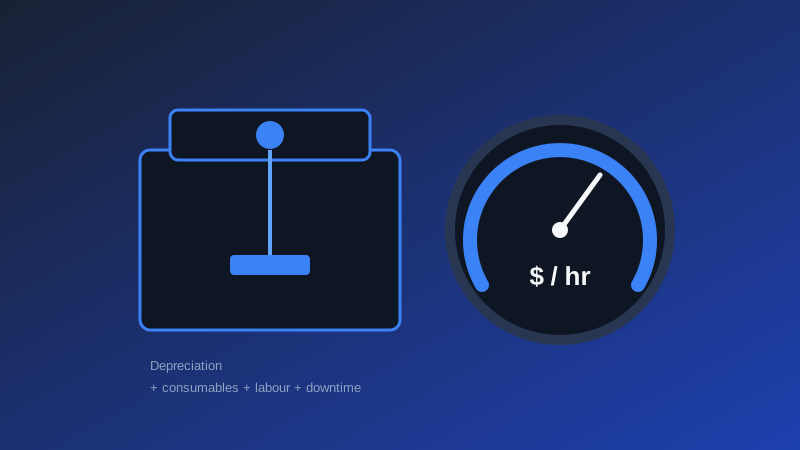
Ask most shop owners what their machine time costs per hour and you'll get one number — the "shop rate" — used for every job on every machine, whether it's a 3-axis mill bought a decade ago or a 5-axis machine still being paid off. It's a convenient number. It's also usually wrong for every single job it's applied to, just wrong in different directions each time.
What the number is actually supposed to contain
A defensible machine hourly rate starts from the machine's total cost of ownership over its useful life, divided by the hours it actually runs. In practice, that means adding up:
- Capital cost — purchase price and initial tooling, spread over the machine's useful life.
- Consumables — tooling wear, lubricants, spare parts, routine repairs.
- Labour — the operator's time running that specific machine.
- Utilization — working hours per day and per year, minus realistic downtime for repairs and slow periods. A machine that only actually runs 60% of the year carries its fixed costs over far fewer hours than the calendar suggests.
- Margin — applied deliberately on top, not folded invisibly into a rounder-looking number.
Two machines with the same purchase price can end up with meaningfully different hourly rates once utilization and consumables are accounted for honestly — an older machine with higher maintenance costs but full utilization can cost about the same per hour as a newer one that sits idle more often. A single shop-wide rate averages all of that away, which means it's flattering on some jobs and quietly unprofitable on others, and there's no way to tell which is which from the invoice alone.
Where the flat rate actually bites
It shows up hardest on the extremes: a quick job on your most expensive, highest-utilization machine gets over-priced against the flat rate and quietly loses you the bid to a competitor with better data; a long job on an older, less efficient machine gets under-priced, and the shop only finds out it lost money on it once the numbers are reconciled weeks later — if they ever are.
One rate per machine, not one rate for the shop
Both ERP 4 CNC and CPQ 4 CNC let you set a distinct hourly rate per machine, built from its own depreciation, consumables, and utilization — so a quote reflects which machine will actually run the job, not a shop-wide average that happens to be convenient to remember.
Further reading